Breaking down is something every driver hopes to avoid, but it remains a common occurrence on UK roads. Whether it’s a flat battery on a frosty morning, a puncture on a country lane, or an unexpected fault while travelling on the motorway, knowing what to do can make a significant difference to your safety and the safety of others.
According to the UK Government’s Road Vehicles (Construction and Use) Regulations and guidance within the Highway Code, motorists should prioritise reaching a place of relative safety wherever possible and avoid putting themselves or other road users at unnecessary risk. Understanding the correct emergency breakdown procedures before you need them can help you remain calm and make informed decisions under pressure.
This guide explains the essential steps every UK driver should know, common causes of roadside breakdowns, and when professional breakdown recovery becomes the safest option.
Why Emergency Breakdown Procedures Matter
A vehicle breakdown is more than an inconvenience. Depending on where it occurs, it can quickly become a safety hazard.
High-speed roads, reduced visibility, poor weather and heavy traffic all increase the risks associated with remaining in or around a broken-down vehicle. National Highways continually reminds motorists that the safest place is often away from live traffic, behind a safety barrier where available.
Having a simple breakdown plan in mind before setting off helps reduce stress if the unexpected happens. Knowing who to contact and understanding the safest course of action allows recovery services to assist you more efficiently.
The Most Common Causes of Vehicle Breakdowns
Many roadside incidents occur without warning, but some of the most frequent causes are relatively predictable.
Flat or Failing Batteries
Battery-related issues remain one of the leading causes of breakdown call-outs, particularly during colder months when batteries are placed under greater strain.
Signs of a failing battery include:
- Slow engine cranking
- Dashboard warning lights
- Electrical systems behaving unusually
- Clicking noises when starting
- Frequent need for jump-starts
If your battery has completely failed, attempting repeated starts can sometimes make matters worse. Professional roadside assistance can safely assess the battery and determine whether a jump-start is appropriate or whether recovery is required.
Tyre Problems
Punctures, damaged sidewalls and sudden loss of tyre pressure can leave your vehicle unsafe to drive.
If you experience a puncture:
- Slow down gradually.
- Avoid harsh braking.
- Pull over somewhere safe.
- Switch on your hazard warning lights.
If you have a serviceable spare wheel and feel confident changing it safely, you may be able to continue your journey. However, if conditions are unsafe or your vehicle has no spare, arranging professional assistance is the safest option.
Mechanical Failures
Modern vehicles are reliable, but components can still fail unexpectedly.
Common mechanical issues include:
- Clutch failure
- Cooling system faults
- Alternator failure
- Engine overheating
- Fuel delivery problems
Continuing to drive after noticing warning signs can often increase repair costs. If warning lights appear alongside unusual noises, smoke or loss of power, it is generally advisable to stop safely and seek assistance.
What To Do If You Break Down
Knowing the correct sequence of actions helps keep everyone safe.
1. Stay Calm
A breakdown can feel stressful, particularly in heavy traffic, but remaining calm helps you make better decisions.
Avoid making sudden movements or stopping in dangerous locations unless necessary.
2. Move to a Place of Relative Safety
The Highway Code advises drivers to leave the carriageway where possible.
Suitable places may include:
- A lay-by
- A service area
- A quiet side road
- A designated emergency area on smart motorways
- The hard shoulder where it is available and appropriate
If your vehicle cannot be moved safely, switch on your hazard warning lights immediately.
3. Turn On Hazard Warning Lights
Hazard lights help alert approaching traffic that your vehicle has stopped unexpectedly.
If visibility is poor due to darkness, rain or fog, keep your sidelights on where appropriate.
4. Exit the Vehicle Safely
If it is safe to do so:
- Leave through the passenger side where possible.
- Move away from live traffic.
- Stand behind a safety barrier if one is available.
- Keep children and pets under close supervision.
Avoid standing beside your vehicle on fast-moving roads.
5. Contact a Breakdown Recovery Service
Provide:
- Your exact location
- Vehicle registration
- Description of the fault
- Any warning lights displayed
- Whether the vehicle is creating an obstruction
Accurate information allows recovery operators to prepare appropriate equipment before arriving.
Breaking Down on a Motorway
Motorway breakdowns require additional caution because of higher vehicle speeds.
If your vehicle develops a fault:
- Indicate and leave the motorway if possible.
- If you cannot leave, move onto the hard shoulder where available.
- If travelling on a smart motorway, use an emergency area whenever possible.
- Turn on your hazard warning lights.
- Exit safely if appropriate.
- Wait behind the safety barrier.
- Contact breakdown recovery.
Do not attempt repairs beside a live traffic lane.
The Highway Code also advises drivers to use emergency roadside telephones where available, as these provide operators with your precise location.
Suggested read: Motorway Breakdown Recovery: What to Do and Who to Call
What If You’re Driving on a Smart Motorway?
Smart motorways can feel unfamiliar if you’ve never broken down on one.
National Highways advises motorists to:
- Reach an emergency area if possible.
- If unable to reach one, stop as far left as you safely can.
- Switch on hazard lights.
- Exit the vehicle if it is safe.
- Call 999 immediately if your vehicle is stranded in a live lane.
Knowing these procedures before travelling can significantly improve safety during an emergency.
Should You Attempt a Roadside Repair?
Some faults are straightforward.
For example:
- Replacing a wheel when conditions are safe.
- Using a battery booster if you have suitable equipment and experience.
However, roadside repairs are not always advisable.
Avoid attempting repairs if:
- Traffic is passing close by.
- Visibility is poor.
- You are on a motorway.
- The vehicle has suffered mechanical damage.
- You feel unsure or unsafe.
There is no benefit in risking injury to avoid calling for assistance.
How Professional Breakdown Recovery Helps
Professional recovery operators do far more than simply tow vehicles.
Depending on the situation, they may:
- Assess the likely cause of the breakdown.
- Carry out a battery jump-start where appropriate.
- Replace a flat wheel with a spare.
- Recover the vehicle if roadside repair is not possible.
- Transport the vehicle to your chosen garage, home or repair centre.
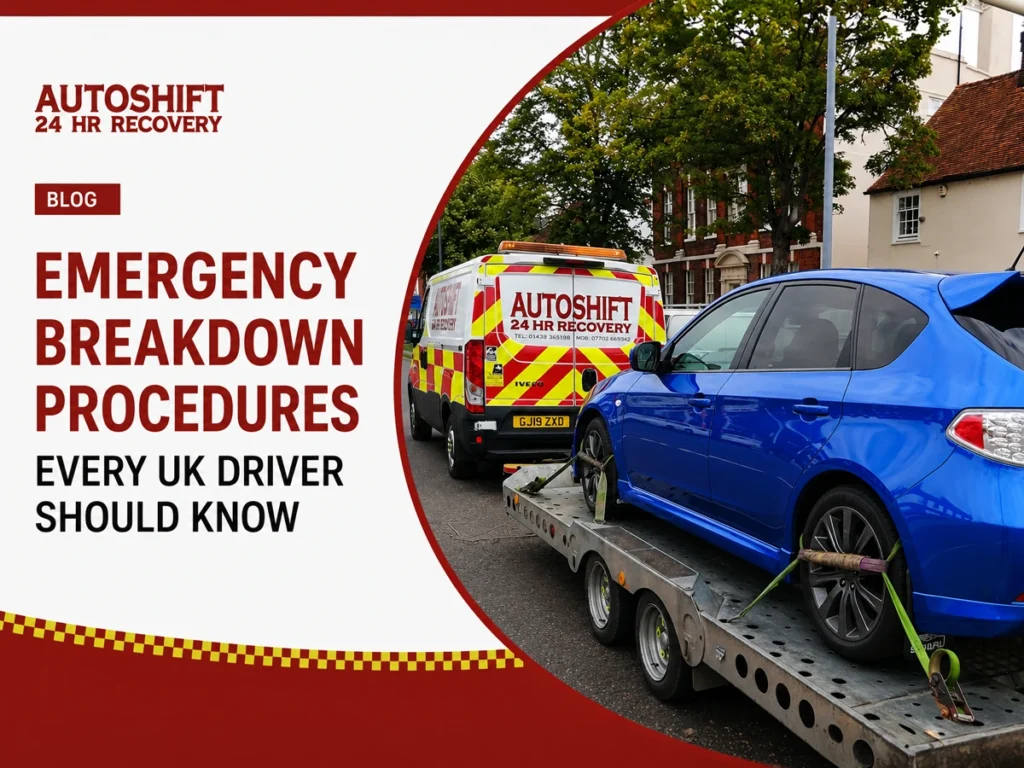
- Load and secure the vehicle using specialist recovery equipment.
Having experienced recovery drivers handle the situation reduces the risk of additional vehicle damage while helping you reach a safe destination.
Preparing for Future Breakdowns
A little preparation can save considerable inconvenience later.
Consider keeping these items in your vehicle:
- Warning triangle (where appropriate, but never place one on a motorway)
- High-visibility vest
- Torch with spare batteries
- Mobile phone charger
- Warm clothing
- Drinking water
- First aid kit
- Ice scraper during winter
- Portable battery pack
Regular vehicle maintenance is equally important.
Simple checks include:
- Tyre pressure
- Oil level
- Coolant level
- Windscreen washer fluid
- Battery condition
- Exterior lights
Routine servicing also helps identify developing faults before they become roadside emergencies.
Preventing Breakdowns Through Regular Maintenance
While no vehicle is immune from unexpected faults, preventative maintenance significantly reduces the likelihood of an inconvenient breakdown.
Drivers should follow the manufacturer’s recommended servicing schedule and pay attention to warning signs such as unusual noises, vibrations, fluid leaks or dashboard warning lights.
Addressing minor issues early is often far less expensive than dealing with a major mechanical failure later.
Before any long journey, it is sensible to carry out a quick walk-around inspection. Checking tyre pressures, ensuring lights are working correctly and confirming that fluid levels are within the recommended range takes only a few minutes but can prevent many common roadside problems.
Stay Prepared and Stay Safe
No driver plans for a breakdown, but every driver should prepare for one.
Knowing how to respond calmly, moving to a place of relative safety, following the Highway Code and contacting professional recovery services when required all contribute to a safer outcome.
Whether the issue is a flat battery, puncture or unexpected mechanical fault, putting safety before convenience is always the right decision.
Frequently Asked Questions
What should I do first if my car breaks down?
Stay calm, switch on your hazard warning lights and move to a place of relative safety if your vehicle can still be driven safely. Once stopped, assess the situation and contact a professional breakdown recovery service if needed.
Is it safe to stay inside my car after a breakdown?
It depends on where you’ve stopped. On motorways and other high-speed roads, the Highway Code generally advises leaving the vehicle when it is safe to do so and waiting behind a safety barrier. If you are unable to leave safely, call 999 if your vehicle is stranded in a live traffic lane.
Should I try to change a flat tyre myself?
Only if it is safe to do so and you are confident in carrying out the task. Never attempt to change a tyre on a motorway or where traffic is passing close to your vehicle.
Can a flat battery always be fixed with a jump-start?
Not always. A battery may have reached the end of its service life or another electrical fault could be preventing the vehicle from starting. A professional assessment can identify the underlying cause.
Where can my vehicle be taken after recovery?
Professional recovery services can usually transport your vehicle to your home, a trusted garage, a repair centre or another destination of your choice, depending on your circumstances.
Need Professional Breakdown Recovery?
If you experience a roadside emergency, Autoshift Recovery is available 24 hours a day, 7 days a week to provide safe, professional assistance. Whether you’ve suffered a flat battery, a puncture, a mechanical fault or require motorway recovery, our experienced recovery drivers will assess the situation, recover your vehicle where necessary and transport it safely to your chosen destination. Speak directly to the driver at any time for clear communication and prompt assistance. To request immediate help, call 01438 740055 or email info@autoshiftrecovery.com.